
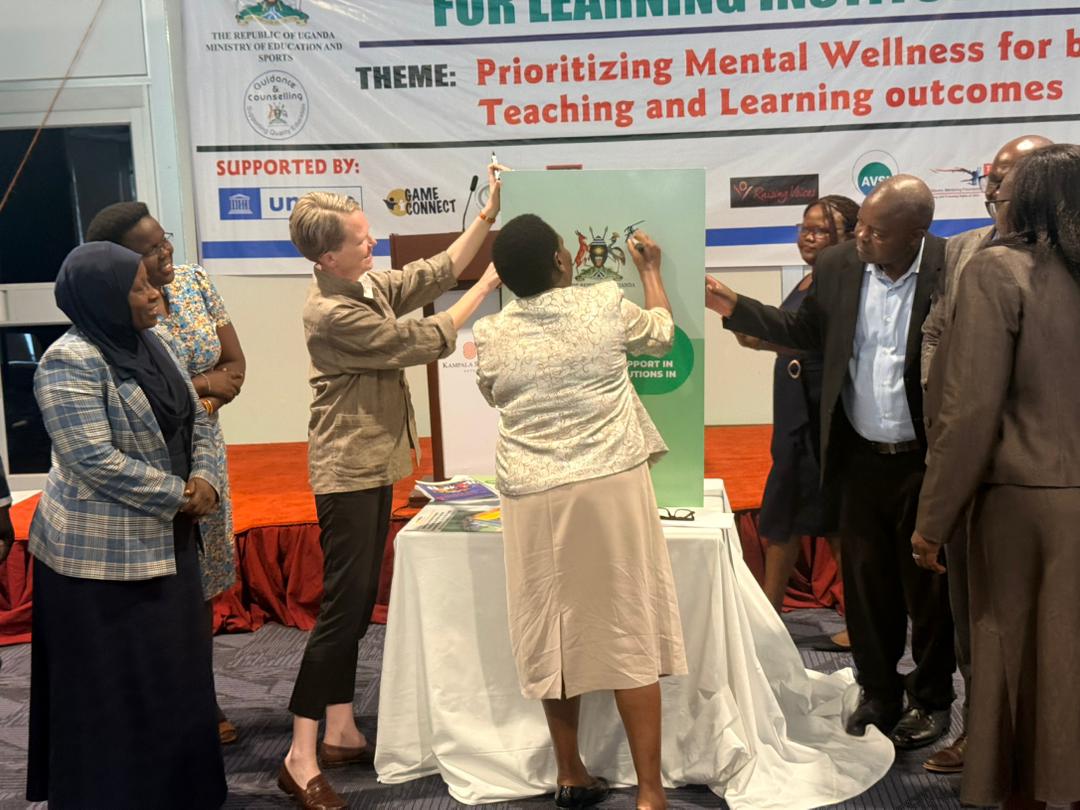
The Ministry of Education and Sports has launched a new set of mental health and psychosocial support materials for schools as officials warn of a sharp rise in depression, anxiety and substance abuse among learners and teachers across Uganda.
Speaking during the launch, Juliet Muzoora said mental health conditions in Uganda have increased significantly in recent years, with facility-reported cases rising by more than 70 percent between 2021 and 2024.
Muzoora attributed the growing crisis to the lasting effects of COVID-19, poverty, unemployment, gender-based violence, substance abuse and pressure within the education system.
“Depression, anxiety, trauma-related disorders, substance issues and psychosocial distress are affecting millions of Ugandans, including approximately 23 percent of children and 24 percent of adults,” she said.
She warned that emotional stress linked to academic performance and social challenges was increasingly affecting both learners and teachers, leading to harmful coping mechanisms such as alcohol and drug abuse, aggression and suicide attempts.
“It is regrettable that many people are adopting negative coping mechanisms, including use of alcohol and narcotic substances, transfer of anger and aggression, and suicidal attempts,” Muzoora said.
The commissioner said government had responded by strengthening psychosocial support systems within schools through the Department of Guidance and Counselling.
According to Muzoora, the ministry has already trained education managers, teachers and peer champions across 37 districts and distributed more than 7,000 mental health support materials to learning institutions nationwide.
She also revealed that mental wellness interventions have now been integrated into the education sector’s plans and budgets.
The materials launched include training manuals for staff and peer leaders, counselling guides, teacher handbooks, learner readers on mental health and substance abuse prevention, counselling flip charts and online learning modules.
Muzoora commended the Ministry of Health, UNESCO, IICBA and other partners for supporting the initiative financially and technically.
She said the ministry hopes the new materials will help improve learner enrolment, retention and transition rates while addressing growing psychosocial challenges affecting schools and communities.
